Senate Opposition Leader Claims KP Decision Was Already Made
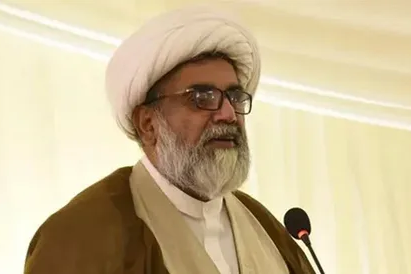
Senate Opposition Leader Allama Raja Nasir Abbas said on Tuesday that negotiations with the government were a sham. He claimed the decision to impose governor’s rule in Khyber Pakhtunkhwa had been made before the talks concluded. He spoke during a Senate session on the province’s emergency. The government gave a different account of how the talks ended.
Background: How the Talks and the Emergency Unfolded
The federal government imposed an emergency and governor’s rule in Khyber Pakhtunkhwa (KP) on Sunday, 11 October 2026, under Articles 232 and 234 of the Constitution. The step followed weeks of tension with the PTI-led provincial government over the party’s long march. The Centre cited the province’s security situation as the reason.
Abbas has been part of the opposition’s role in that dispute. PTI said earlier that party founder Imran Khan had given Mahmood Khan Achakzai and Abbas full authority to negotiate. He leads the Majlis Wahdat-e-Muslimeen (MWM) and became Senate opposition leader in January 2026 with PTI’s backing.
Details: What Raja Nasir Abbas Said in the Senate
The Core Claim
Abbas told the House that “the negotiations were a sham,” according to The Express Tribune. He said the opposition had shown a willingness to compromise, but the government had already chosen its course. He told the chamber, which was chaired by Syed Yousuf Raza Gilani, that talks had been meaningless.
He also said the opposition had stepped back from its demand for a meeting with Imran Khan, and that the government still refused to compromise on any issue. He added that he had taken part in negotiations in which consensus had been reached on political matters.
Warnings and Appeals
Abbas warned that governor’s rule could worsen the security situation instead of restoring peace. He cited past examples of military intervention in Pakistani politics and cautioned the government against steps that could push people away from the political system. He asked why a democratic government could not tolerate dissent, drawing a comparison with former military ruler Pervez Musharraf.
He urged the government to end governor’s rule. He said the decision would not deliver lasting peace and could damage the country, but added that mistakes could still be corrected if the government reconsidered.
The Government’s Account
Interior Minister Mohsin Naqvi also spoke in the Senate. He said the government had tried to reach an agreement with PTI before deciding on governor’s rule or an emergency. According to 24NewsHD, he said the first day of talks dealt only with terrorism. He said a draft agreement was sent to the chief minister, who forwarded it to Murad Saeed, after which the talks collapsed.
Naqvi asked why PTI representatives took part in negotiations if they lacked the authority to finalise a deal. He said the government would not have needed governor’s rule if the agreement had been completed. He also said the option had been available earlier, but the government had not used it.
Impact: Why the Dispute Matters
The two accounts show a deep gap over what happened in the talks. If governor’s rule was decided in advance, the opposition has an argument that the process was never genuine. If the talks failed because PTI’s negotiators could not commit, the government has a case that it acted as a last resort. Both claims remain to be tested.
The dispute also affects parliament. Reports said the PML-N parliamentary party was set to ratify the move in the National Assembly. How the vote and the debate go will shape whether the opposition can still pursue talks with the government.
Conclusion: What Comes Next
The next step is the National Assembly’s handling of the emergency, along with any court challenges. Abbas has called for governor’s rule to be withdrawn, and the government has shown no sign of doing so. Further talks would likely depend on access to Imran Khan, which the opposition has repeatedly raised.
For now, both sides are blaming each other for the collapse of dialogue.
FAQs
How old is Raja Nasir Abbas Jafri?
Raja Nasir Abbas Jafri is 66 years old as of October 2026. According to his Wikipedia profile, he was born on 15 September 1960. He is a Shia cleric and the head of the Majlis Wahdat-e-Muslimeen. He was elected unopposed to the Senate from Punjab in the 2024 Senate election. Wikipedia is a secondary source, so confirm his date of birth against his official Senate profile before using it in a formal context.
Who is the current chairman of the MWM party?
Allama Raja Nasir Abbas Jafri is the current head of the Majlis Wahdat-e-Muslimeen. Media reports and the Senate notification describe him as the MWM chief, and his Wikipedia entry lists him as chairman of the party. He has led the party for several years and formed an alliance with PTI before the 2024 elections. He is also a member of the Senate. If you need a formal title for a legal or official document, check the party’s own announcement.
Who is the current opposition leader in the Senate?
The current Leader of the Opposition in the Senate is Allama Raja Nasir Abbas. Senate Chairman Yousuf Raza Gilani notified him on 20 January 2026. The post had been vacant since August 2025, when the Election Commission disqualified the previous opposition leader, Shibli Faraz, after a conviction in cases linked to the 9 May 2023 riots. PTI nominated Abbas for the role in October 2025. His appointment came after Mahmood Khan Achakzai was named opposition leader in the National Assembly.
What is the date of birth of Allama Nasir Abbas?
According to Wikipedia, Allama Raja Nasir Abbas Jafri was born on 15 September 1960. That makes him 66 at the time of writing. I could not confirm his place of birth from reliable sources, so this article does not state one. The one verified geographic detail is that he was elected to the Senate from Punjab. For an exact biography, use his official Senate profile or an authorised statement from the MWM.